
Official export and Chestny ZNAK
The complete procedure for exporting tea to Russia
Preparation
About one month
Payment
100% in advance
Delivery terms
DAP / FCA
Stage 1. Preparing for export
(Preparation for shipment takes approximately one month. Production and order preparation begin only after payment in full.)
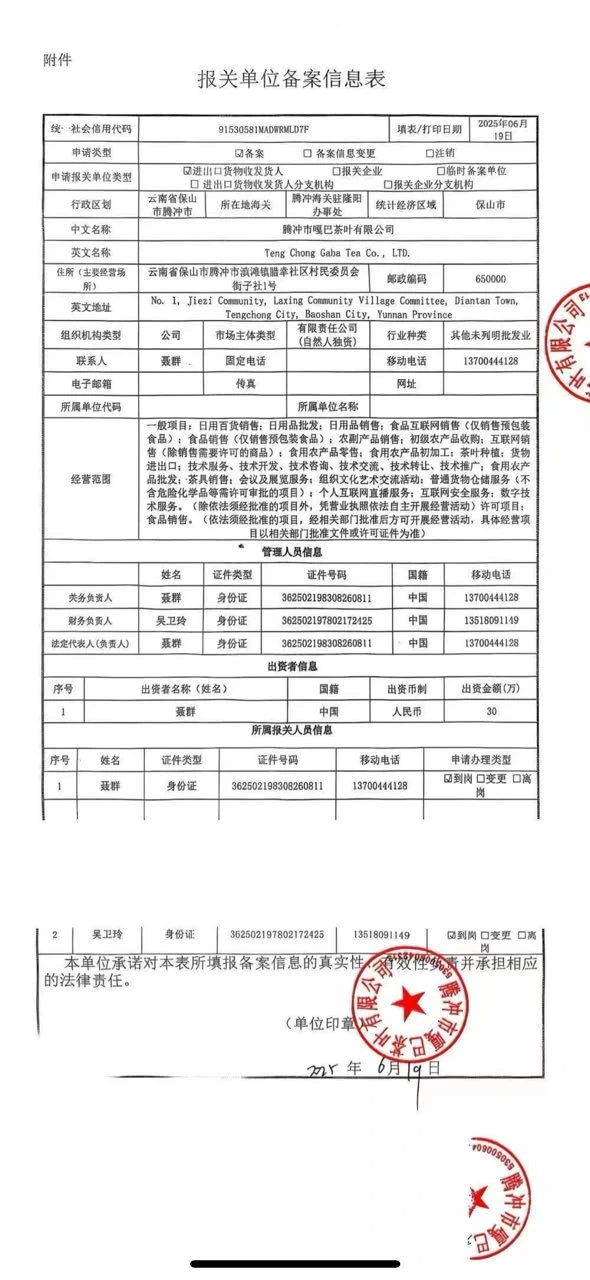
1. Exporter qualifications (Tengchong Gaba Tea Co., Ltd.):
- company registration certificate and SC food production licence (including tea processing);
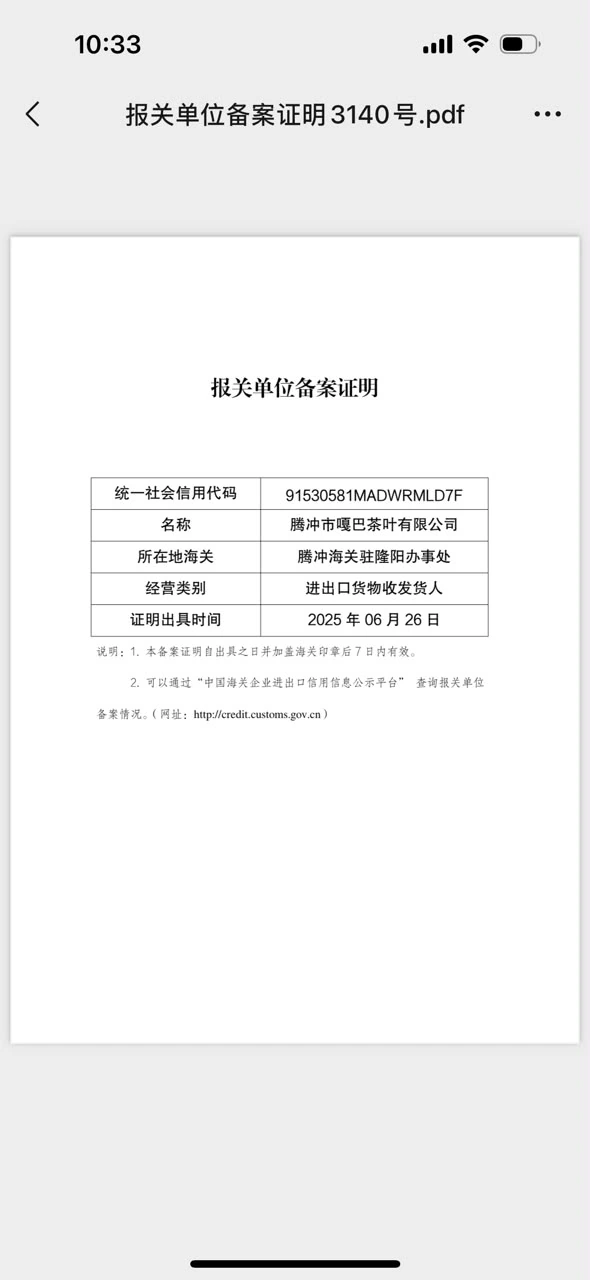
- registration of the export food manufacturer with China Customs;
- registration of tea plantations supplying raw materials for export with China Customs.
2. Laboratory testing (CNAS-accredited laboratory).
Parameters tested: pesticide residues, heavy metals (lead and cadmium), microbiological indicators, mycotoxins and GABA content. The test report is used for customs control in China and as a basis for obtaining an EAC declaration of conformity in Russia.
3. Requirements for the Russian importer (the Russian party’s responsibility):
- the importer must be a legal entity registered in the Eurasian Economic Union and act as the applicant for the EAC declaration of conformity;
- the importer must be registered with Rospotrebnadzor and hold a food import licence;
- an EAC declaration of conformity must be obtained under Technical Regulations TR CU 021/2011 (food safety) and TR CU 022/2011 (food labelling);
- Russian-language labelling must be developed and checked in advance by a Russian certification body.
4. Signing the trade contract.
A bilingual Chinese–Russian foreign trade contract is signed. It specifies product characteristics, packaging, quantity, price, delivery terms (DAP Moscow / FCA warehouse in China are recommended), and payment terms: 100% in advance. Production, processing and order preparation begin only after full payment has been received. The allocation of responsibilities is also specified, including the importer’s responsibility for obtaining the EAC declaration.
Stage 2. Order preparation, packaging, inspection and export customs clearance
1. Packaging requirements:
- sealed aluminium inner packaging with a desiccant to protect against moisture and foreign odours during long-distance transport;
reinforced cardboard boxes. Wooden pallets require fumigation and a fumigation certificate. Plastic pallets that do not require fumigation are recommended;
- transport alongside aromatic substances or chemical products is prohibited (tea readily absorbs foreign odours and may be spoiled).
2. Pre-export inspection (the International Trade Single Window).
Inspection application → on-site inspection and sampling by local customs → following a successful inspection, customs issues two key original certificates:
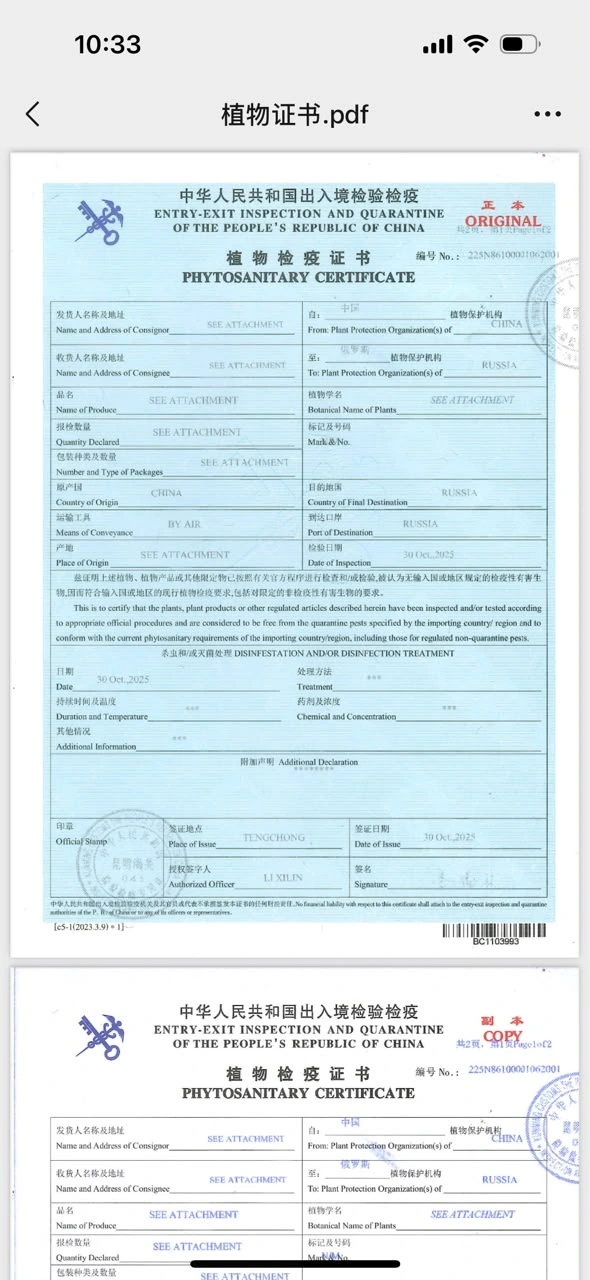
- phytosanitary certificate: confirms the absence of harmful organisms and is mandatory for inspection at Russian border customs;
- sanitary certificate: confirms product safety and is required for food customs clearance in Russia.
3. Filing the export customs declaration.
The customs broker files a declaration through the International Trade Single Window and uploads the contract, commercial invoice, packing list, phytosanitary certificate, sanitary certificate and CNAS laboratory test report. Customs reviews the documents; a spot check of the goods may include labelling, packaging and quantity. Following a successful inspection, the goods are sealed and sent to the Chinese border crossing.

Stage 3. Transport options
- China–Europe freight train (Chongqing / Chengdu – Alashankou – Moscow): 18–28 days. Recommended: reliable protection against moisture.
- Road transport under the TIR system (Alashankou / Khorgos): 10–14 days. Suitable for samples and exhibition goods.
- Sea freight: 35–45 days. Large consignments of inexpensive goods; not recommended for premium GABA tea (risk of absorbing moisture and odours).
Stage 4. Border controls and customs clearance in Russia
Chinese border crossing: documents and seals are checked, and the goods leave China.
Russian border crossing:
- Rosselkhoznadzor checks the phytosanitary certificate and inspects for harmful organisms;
- the Russian importer files a declaration with Russian customs and provides the contract, invoice, packing list, EAC declaration, phytosanitary and sanitary certificates, and Chestny ZNAK data. An ST-1 certificate of origin may optionally be provided to reduce customs duty;
- customs reviews the documents, determines the customs value and calculates customs duty and VAT (20%). The importer pays the taxes;
customs may randomly take samples for laboratory testing of pesticide residues and heavy metals. If the goods fail the tests, they may be destroyed or returned to China, resulting in substantial losses;
- after taxes have been paid, the goods are released into Russia for circulation throughout the Eurasian Economic Union.
Stage 5. Domestic transport and handover
Following customs release, the goods are delivered by rail or road to the buyer’s warehouse in Moscow. Under DAP terms, the seller is responsible for delivery to the buyer’s warehouse. DDP terms (with the seller paying all taxes and handling customs clearance) carry high risks and are generally not recommended for food products.
Russia’s Chestny ZNAK labelling system: requirements and risks
1. What is Chestny ZNAK?
Chestny ZNAK is Russia’s mandatory state digital product traceability system. Each individual retail package receives a unique square Data Matrix code. Product data — from warehouse receipt and wholesale sale to retail sale — must be uploaded to the state Chestny ZNAK system. This is a mandatory legal requirement for retail food sales in Russia.
2. The seriousness of the legal requirements
Russia is gradually adding new food categories to the list of products subject to mandatory Chestny ZNAK labelling: packaged tea is being included according to the Russian regulators’ schedule. The law is strictly enforced: missing codes, code errors or incomplete traceability data result in goods being held at customs.
Even if the goods have entered Russia, an inspection at a warehouse or at the wholesale or retail stage may lead to seizure and confiscation. The importer faces substantial administrative fines and damage to its business reputation, negatively affecting its ability to continue importing food products.
Many foreign trade companies ignore the new Chestny ZNAK rules and use old customs clearance procedures. As a result, large consignments are held at the border, causing enormous financial losses.
3. Our capabilities
We are familiar with the complete Chestny ZNAK procedure. Together with the Russian importer, we can plan code application in advance, help prepare the documents, eliminate the risks of incorrect labelling and missing traceability data, ensure lawful retail sales of GABA tea in Russia, and support stable, long-term cooperation.
Complete document checklist
Documents provided by the exporter — Tengchong Gaba Tea Co., Ltd.:
- Company registration certificate, SC food production licence and confirmation of registration as an export food enterprise with China Customs.
- Foreign trade contract, commercial invoice and packing list.
- CNAS laboratory test report (pesticide residues, heavy metals, microbiological indicators, etc.).
- Phytosanitary certificate.
- Sanitary certificate.
- Export customs declaration and power of attorney for the customs broker.
- Fumigation certificate (when wooden pallets are used).
- ST-1 certificate of origin (optional, for preferential customs duty).
Documents prepared by the importer:
- EAC declaration of conformity (TR CU 021/2011 + TR CU 022/2011).
- Russian-language product labelling.
- Importer’s incorporation and taxpayer documents.
Recommendations for cooperation
Samples may be sent before a large shipment to test the entire customs clearance process and check the EAC declaration, Russian-language labelling and test reports.
Protection against moisture and foreign odours during transport is essential: sealed aluminium packaging with a desiccant is used.
EAEU pesticide residue limits are stricter than China’s domestic limits, so testing is carried out in advance against EAEU requirements.
Only official, lawful customs clearance is used; grey schemes are not used.
Payment terms are 100% in advance; production and order preparation begin only after payment has been received in full.